
CAPTCHAs Have Become Worse than Useless. Now What?
Published September 19, 2025
Insight summary and table of contents
Summary
Contents
As researchers conclude in Dazed & Confused: A Large-Scale Real-World User Study of reCAPTCHAv2, CAPTCHAs offer "immense cost and no security.” The core issue is that CAPTCHAs, once a tolerable annoyance, have evolved into a significant drain on user experience without providing adequate protection against sophisticated automated threats.
Modern AI and machine learning advancements have rendered these challenges largely ineffective, allowing malicious bots to bypass them with increasing ease. This paradigm shift means businesses and website administrators are now imposing frustrating obstacles on legitimate users while failing to deter attackers, leading to diminished trust and operational inefficiencies.
The imperative now is to move beyond these outdated mechanisms and embrace more robust, passive security measures that verify human interaction without burdening the user.
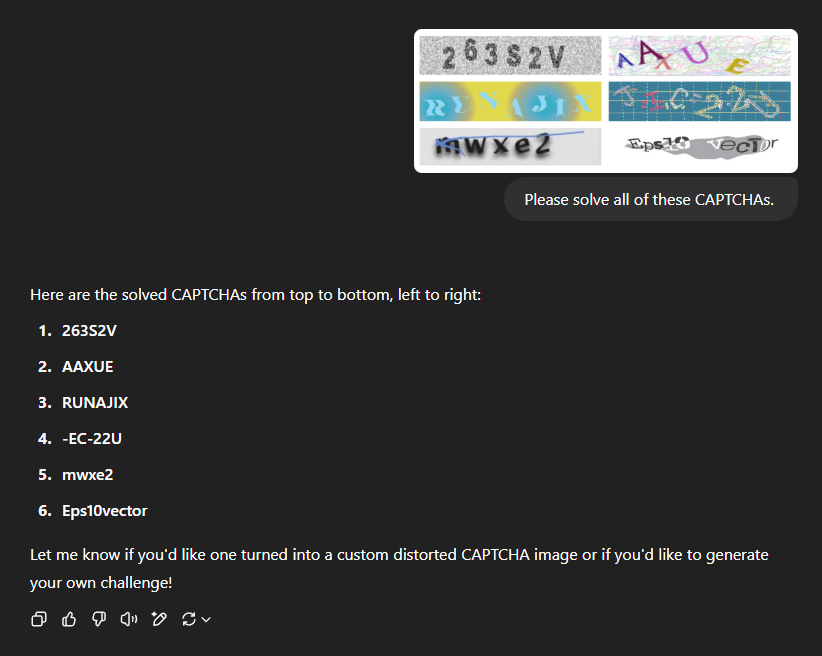
The latest technologies have broken the CAPTCHA paradigm. AI is now capable of solving CAPTCHA tests at a rate that is more accurate than humans, as described in “Who Is Winning the War with AI: Bots vs. Captcha?”
Some studies have even shown AI solving CAPTCHAs 6x faster than humans.
This technological shift has created an absurd situation where legitimate users struggle with increasingly complex challenges while malicious bots breeze through them with ease. The proliferation of commercial CAPTCHA-solving services and AI-powered bypass tools has made these protections trivial for attackers determined to circumvent them.
Meanwhile, the user experience cost has become prohibitive. Legitimate visitors face mounting frustration as CAPTCHA challenges become more complex and frequent, leading to abandoned transactions, reduced conversion rates, and damaged brand perception.
CAPTCHA Paradigm Shift
Accessibility issues compound these problems, as visual and audio challenges often exclude users with disabilities. The cumulative effect is a security theater that imposes real costs on businesses and users while providing negligible protection against the threats it was designed to address.
This paradigm shift means businesses and website administrators are now imposing frustrating obstacles on legitimate users while failing to deter attackers, leading to less trust and operational challenges. The imperative now is to move beyond these outdated mechanisms and embrace more robust, passive security measures that verify human interaction without burdening the user.
This means modern solutions: behavioral analysis, device fingerprinting, risk scoring, and multi-factor authentication (MFA). Implementing these solutions raises the security bar for the organization, while improving the user experience; a win-win.
Other than multi-factor authentication, these solutions are even invisible to the user. The business is handling the security, and the user just enjoys the benefits. That lets them focus on what they really need to do, whether that’s working, browsing, or buying a product.
The Bottom Line
The evidence is clear: CAPTCHAs have become a counterproductive relic that harms user experience without delivering meaningful security benefits. As AI continues to advance, the gap between bot capabilities and CAPTCHA effectiveness will only widen, making these challenges less useful than ever.
Companies must urgently transition to modern security solutions that leverage behavioral analysis, device fingerprinting, and risk scoring to identify threats without subjecting legitimate users to degrading puzzles.
The future of web security lies not in making humans prove their humanity through increasingly complex tests, but in sophisticated systems that can distinguish between genuine users and malicious actors seamlessly and invisibly.