
Identity and Access Management: 2000 vs. 2025
Published November 11, 2025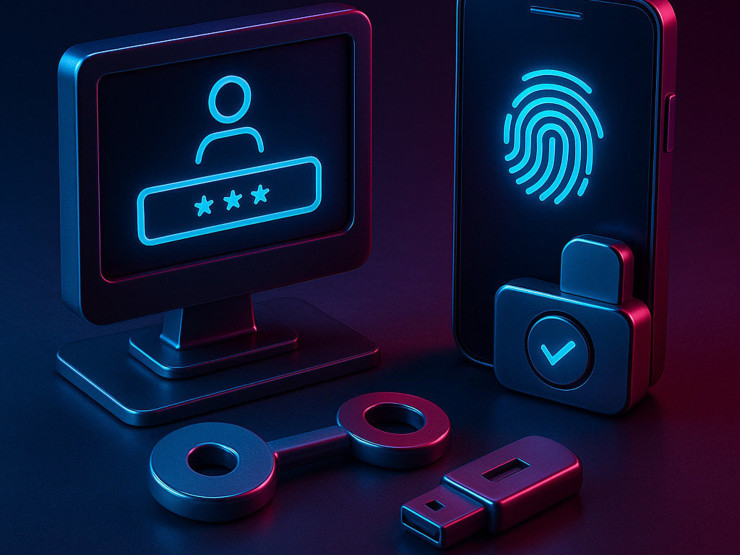
Insight summary and table of contents
Summary
If you’ve been around tech for some time, you know how much the world of security has changed. Back in 2000, Identity and Access Management (IAM) mostly meant remembering a bunch of complicated passwords and hoping you didn’t forget the one for your email.
Fast-forward to 2025, and IAM is a whole different ballgame: smarter, faster, and much more user-friendly. Let’s take a quick trip through time and see how far we’ve come.
IAM in 2000: Passwords, Passwords, and More Passwords
At the start of the millennium, IAM was pretty bare bones. If you wanted to log in, you had a username and a password. That was it.
Companies tried to beef things up with password rules—uppercase letters, numbers, special characters—but it didn’t solve the problem of stolen or weak credentials.
Here’s what IAM looked like back in 2000:
- Password overload: Most people had a different password for every system… or reused the same one everywhere (not great for security).
- Corporate networks ruled: Security focused on the perimeter; the digital “walls” of a company’s network. If you were inside the firewall, you were trusted.
- Directories were king: Tools like Active Directory managed accounts, but only for systems inside the organization.
- Clunky experience: Forget one password and you were calling the IT team. Consumer logins were just as fragmented; Hotmail here, AOL there, nothing connected.
IAM got the job done, but it was slow, inconvenient, and not built for the internet-everywhere world that was on the horizon.
IAM in 2025: Identity is the New Perimeter
Now jump to today. The workplace isn’t just a single office with a firewall anymore.
Employees are logging in from coffee shops, mobile phones, home offices, and airports. Customers expect to sign in to apps with a tap or two, not juggle 10 different passwords. That shift has pushed identity to the center of security.
Here’s what modern IAM looks like in 2025:
- Multi-factor as the norm: Passwords alone? Forget it. Now we’ve got fingerprints, Face ID, hardware keys, and mobile push notifications. In fact, passwordless logins are quickly taking over.
- Zero Trust: The old “castle and moat” is gone. Every access request gets checked: who you are, what device you’re on, and where you’re logging in from. Trust is never assumed.
- Cloud everything: Companies rely on Identity-as-a-Service (IDaaS) platforms like Okta or Azure AD to connect employees to hundreds of apps. It’s all centralized and much easier to manage.
- Artificial Intelligence (AI) in the mix: Today’s IAM tools use machine learning to spot weird behavior, like when someone logs in from New York and five minutes later from Tokyo, and block it in real time.
- Better user experience: Single sign-on (SSO) means one login can unlock dozens of apps. Customers can use social logins or biometric authentication without breaking their flow.
IAM has shifted from being a frustrating gatekeeper to being the enabler of smooth, secure digital experiences.
Then Vs. Now
To put it simply:
- 2000: Passwords, firewalls, clunky systems
- 2025: Passwordless, Zero Trust, cloud platforms, AI-driven security, seamless logins
In other words, IAM went from being a headache to being one of the most important parts of modern security.
What's Next?
Looking ahead, the password may disappear completely (and not a lot of people will miss it). Decentralized identity, where you own and control your digital credentials, could become the norm. And with AI getting sharper, access decisions may become so seamless we barely notice them happening.
What hasn’t changed? The mission. IAM still comes down to making sure the right person has the right access at the right time.
But from 2000 to 2025, the way we get there has transformed, and it will keep evolving as the digital world moves forward.